Built to Break You: The Hidden Architecture of Digital Loneliness
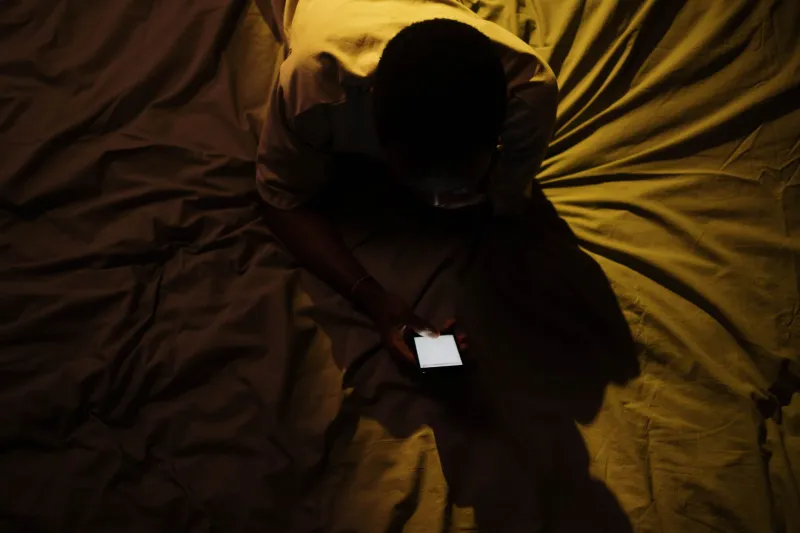
There's a specific kind of quiet that hits after you close an app you've been on for two hours. Not peaceful quiet. The other kind. The kind where you realize you just "talked" to forty people and feel like you haven't spoken to anyone at all.
That's not an accident. That's engineering.
Social networks were never really designed to make you feel connected. They were designed to make you want connection badly enough to keep reaching for it — and to keep that reach just slightly out of range. The loneliness you feel isn't a side effect of the platform. In a lot of ways, it's the product.
The Warmth That Isn't There
Here's the strange thing about modern social media: it is, by every measurable metric, the most "social" environment humans have ever created. You can reach thousands of people in seconds. You can find your exact niche — people who love the same obscure band, the same regional snack, the same corner of a fandom that barely existed five years ago. The sheer density of human signal bouncing around these platforms is genuinely unprecedented.
And yet. The American Psychiatric Association reported in 2023 that nearly a third of adults in the US feel lonely at least once a week. Other surveys push that number higher depending on age group, with younger adults — the ones who grew up inside these platforms — reporting the sharpest sense of isolation. The more connected the infrastructure, the lonelier the people inside it seem to get.
That paradox has a mechanism. And once you see it, you can't really unsee it.
Intimacy at Industrial Scale
The core trick social platforms pulled off was teaching us to equate visibility with closeness. A like isn't connection. A comment isn't a conversation. A follower count isn't a community. But the dopamine hit is calibrated to feel like it might be — just enough to keep you chasing the real thing through a system that structurally cannot deliver it.
Platforms learned early on that ambient awareness — the low-level sense that you know what's happening in other people's lives — could substitute, psychologically, for actual contact. You don't call your college roommate anymore, but you watched their vacation reel, so you feel vaguely caught up. You didn't check in on your cousin who's going through something hard, but you left a heart emoji on their post, so the social obligation box got ticked.
The result is a kind of relational debt that never gets paid. You're constantly absorbing information about people without actually engaging with them. And they're doing the same to you. Everyone is watching everyone else's highlight reel and feeling, weirdly, more alone for it.
When the Algorithm Learned to Mimic Empathy
This gets stranger when you factor in what recommendation systems have gotten good at. The machine doesn't just know what content you like — it's increasingly accurate at modeling your emotional state, your social needs, your loneliness triggers. It knows when you're more susceptible to certain kinds of posts. It knows the specific flavor of content that will make you feel almost seen.
That "almost" is doing a lot of work.
There's a term researchers use: parasocial relationship. It describes the one-sided bond people form with media figures — YouTubers, streamers, podcasters — where you feel genuine affection and familiarity toward someone who doesn't know you exist. Platforms didn't invent this phenomenon, but they industrialized it. They figured out how to engineer parasocial attachment at scale and then pipe it directly into the gap left by deteriorating real-world social ties.
The streamer who talks to chat like they're your friend. The influencer who shares their "authentic" struggles. The algorithm that keeps serving you content from that one creator who somehow always seems to get it. These aren't coincidences. They're features. The system is filling the loneliness it helped create with a simulacrum of warmth that requires your continued engagement to sustain.
The Feedback Loop Nobody Talks About
Here's where it gets genuinely dark. The more isolated a user becomes, the more they lean on digital connection to compensate. And the more they lean on digital connection, the more the platform's systems can optimize for that dependency. Lonely users are, from a pure engagement standpoint, incredibly valuable. They spend more time on-platform. They're more reactive to social validation signals. They're more susceptible to community content that promises belonging.
So the machine learns to keep them lonely enough to stay, but just satisfied enough not to leave. It's a feedback loop that looks like care and functions like a trap.
This isn't a conspiracy theory — it's a design outcome. Nobody sat in a meeting and said "let's make users lonelier." But when the optimization target is time-on-app and the metric for success is engagement, loneliness becomes a resource. The platform doesn't need you to be happy. It needs you to be almost happy.
What Gets Lost in the Translation
Real connection — the kind that actually moves the needle on loneliness — has some qualities that don't translate well to platforms. It's slow. It's specific. It involves being genuinely witnessed by another person, not just seen by an audience. It requires reciprocity in real time, not asynchronous reactions.
Platforms can simulate the surface texture of these things. They cannot replicate the substance. And the longer we spend in environments where the simulation is the default, the harder it becomes to tolerate the friction of actual human contact. Real conversations are inefficient. Real relationships are messy and ambiguous. Real people don't respond with perfectly curated content.
The machine made us faster and flatter at the same time.
Finding the Signal
None of this means platforms are irredeemably broken or that digital spaces can't host genuine human moments. They can. They do. But the genuine stuff tends to happen at the edges — in small Discord servers, in comment threads that go unexpectedly deep, in the DMs that never made it into anyone's public feed. The real signal is usually buried under a lot of engineered noise.
What's worth sitting with is the gap between what these platforms promised and what they actually built. They said connection. They built proximity. They said community. They built audience. And they've spent years making those distinctions hard to feel, because feeling the gap is exactly the kind of discomfort that might make you log off.
The loneliness engine runs on your hope that the next scroll will be the one that finally closes the distance. It won't be. But the machine already knew that.