Alone Together, But Make It a Feature: How Your Apps Quietly Decided You Were Better Off Solo

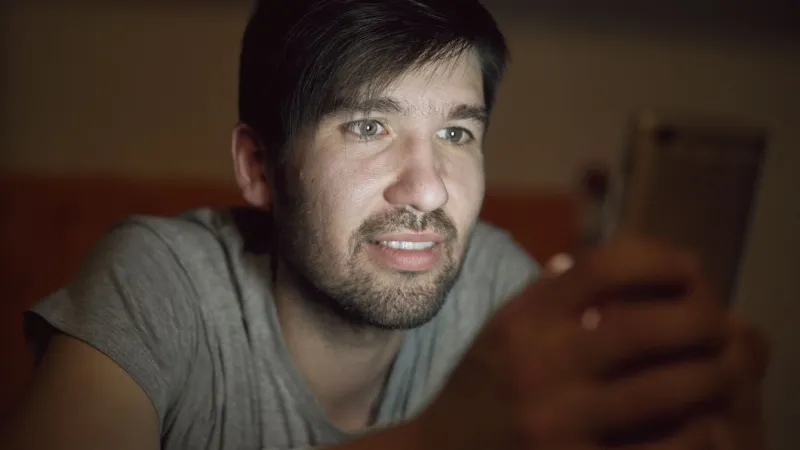
There's a specific kind of comfort that comes from being in your apartment at 10 PM, phone in hand, nobody texting you, and somehow feeling completely fine about it. Better than fine, actually. You're warm. You're entertained. You're getting little dopamine hits from a comment someone left on a photo you posted three weeks ago. You're not lonely. You're optimized.
That feeling didn't arrive by accident.
Somewhere between the third season of whatever you're half-watching and the forty-seventh short video you've absorbed this week, your apps quietly completed a project they never announced: they made being alone feel better than being with people. Not just tolerable. Preferable.
This is what some researchers are starting to call loneliness optimization — the deliberate, data-driven process by which platforms have tuned solitude into a product experience so smooth, so responsive, so perfectly calibrated to your specific preferences, that actual human company starts to feel like friction by comparison.
The Notification as Companionship
Here's something nobody talks about in polite company: notifications are social substitutes. Not just distractions, not just interruptions — they are engineered moments of being seen. Someone liked your post. Someone replied. Someone watched your story all the way through. Each ping carries the neurological signature of social acknowledgment without any of the messiness of real interaction.
You don't have to respond thoughtfully. You don't have to manage anyone's feelings. You don't have to be present in any meaningful sense. You just have to exist, and the app rewards you for it.
UX researchers have documented for years how notification timing is deliberately calibrated to maximize re-engagement — not just to bring you back to the app, but to give you a hit of connection-feeling at the exact moment you're most likely to be alone and receptive. Late evenings. Sunday afternoons. The twenty minutes before you'd normally call a friend.
The platforms aren't filling a void. They're becoming the void, and decorating it nicely.
Variable Reward and the Social Slot Machine
The psychological mechanism underneath all of this has been kicking around behavioral science since B.F. Skinner was making pigeons press levers in the 1950s. Variable reward schedules — where reinforcement comes unpredictably, sometimes big, sometimes nothing — produce the most persistent behavior patterns of any reward system. Casinos know this. App designers know this too.
The social feed is a variable reward machine. Sometimes you post something and get forty responses. Sometimes you post the same kind of thing and hear nothing. The unpredictability doesn't make you quit — it makes you check more. It makes you need to check, because maybe this time is the time.
What's different now is how that mechanism has been weaponized specifically to replace social needs. Older slot machines just wanted your money. These systems want something more intimate: they want to be the thing you turn to when you're lonely, anxious, bored, or uncertain. They want to be your first instinct before another person even crosses your mind.
And increasingly, they are.
The Parasocial Upgrade
If notifications are the entry drug, parasocial relationships are the long-term product. You probably know someone — maybe you are someone — who feels genuinely close to a YouTuber they've never met, a podcaster whose voice has narrated their morning commute for three years, a streamer who seems to know exactly what kind of humor lands for them.
That feeling is real. Parasocial bonds activate the same neurological pathways as actual relationships. The warmth is genuine. The sense of being understood is genuine. What's not genuine is the reciprocity — and that asymmetry is a feature, not a glitch.
A real friend has needs. A real friend sometimes says the wrong thing, has a bad day, needs you to show up for them. A parasocial relationship is a friendship with all the emotional nutrition and none of the caloric cost. Algorithms have learned to serve you more of the creators who scratch your specific itch, deepening those one-sided bonds over time, until the curated digital companion starts to feel more reliable than the unpredictable humans in your actual life.
Platforms didn't invent parasocial relationships — those go back to radio personalities and soap opera characters. But they supercharged the delivery mechanism and made it hyper-personal in a way that's qualitatively different from anything that came before.
What Gets Lost in the Optimization
The problem with optimizing for comfort is that comfort and growth are often in opposition. Real relationships involve misunderstanding, repair, awkwardness, and the particular kind of intimacy that only comes from having weathered something together. None of that survives the frictionless design philosophy.
A 2023 survey from the American Psychological Association found that despite being more connected than any generation in history, adults under 35 reported some of the highest rates of loneliness ever recorded. The connection is happening — it just isn't the kind that feeds what loneliness is actually hungry for.
There's also something worth naming about shame here. If you've ever felt vaguely guilty for preferring a night of solo scrolling to making plans with people you actually like, that guilt is pointing at something real. The preference has been engineered into you, but the cost is still yours to carry.
Solitude Was Always Okay. This Is Different.
To be clear: being alone is not the problem. Solitude has always been necessary, valuable, even sacred in certain traditions. The issue isn't that people spend time alone — it's that the time alone has been colonized by systems designed to make you dependent on them for the feelings that solitude used to generate naturally.
Quiet, unmediated alone time — the kind where you stare out a window, or let a thought actually finish itself, or feel bored enough to call someone — is increasingly rare. It's been replaced by a managed, monetized version of aloneness that looks like rest but functions like engagement.
The signal from the static used to be something you had to tune for. Now it finds you automatically, at exactly the right moment, and it knows what frequency you're on.
The question worth sitting with — preferably without your phone in your hand — is whether you chose this, or whether the choice was made for you a long time ago, one perfectly timed notification at a time.