Fifty Tabs Deep: The Strange Afterlife of Every Link You Meant to Get Back To
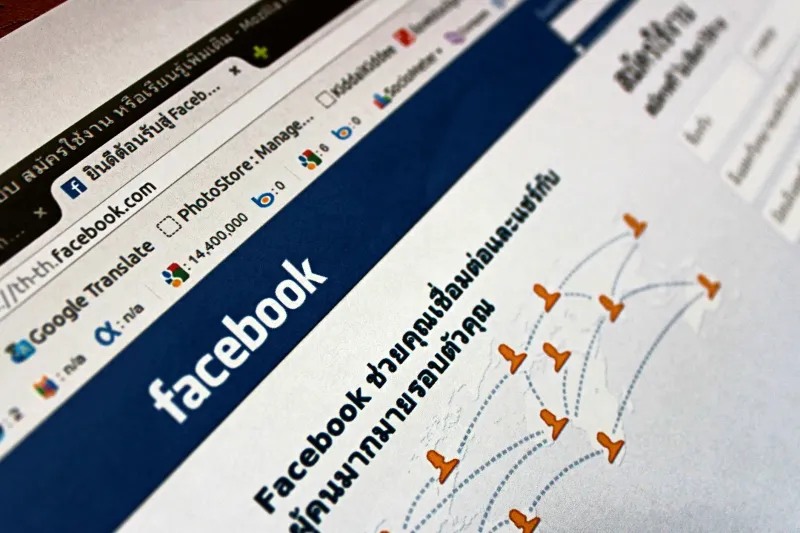
Open your browser right now. Go ahead. Count the tabs.
If you're anything like the average American internet user — and statistically, you probably are — you've got somewhere between eight and forty-three of them sitting up there like little gravestones in a row. A recipe you bookmarked three weeks ago. A Wikipedia rabbit hole about the history of salt mining you fell into at 1 a.m. A Reddit thread you were definitely going to respond to. A product you almost bought. An article that was supposed to change how you think about something.
None of them are going anywhere. None of them are getting read. And yet — you will not close them.
This is the attention graveyard. And you built it yourself.
Why We Open Tabs Like We're Collecting Evidence
There's a particular psychology behind the tab. It's not quite a bookmark — that's too permanent, too organized, too much like admitting you care enough to file something away. A tab is looser than that. A tab is a promise. It says: I saw this, I wanted it, and I'm not done with it yet.
Psychologists sometimes frame this through the lens of the Zeigarnik effect, which basically describes how the human brain holds onto unfinished tasks more stubbornly than completed ones. Your mind actively flags incomplete things as unresolved. Tabs exploit this perfectly. They sit in your peripheral vision — literally — as low-grade signals that something is waiting for you. Something is unfinished. Something needs your attention when you get a second.
You never get a second.
But here's the twist: you don't actually want to. Because as long as the tab is open, the possibility is still alive.
The Tombstone That Proves You Were Curious Once
There's something weirdly comforting about a cluttered browser. Close everything and the slate is blank — and blank is terrifying. Blank means you've consumed everything you intended to consume, processed every thought, followed up on every impulse. That's not how real people work. That's not how interesting people work, or at least that's the story we tell ourselves.
The tabs are proof. Evidence of curiosity. A scattered, chaotic record of every time something caught your attention and made you think I want to know more about this. The deep-sea creature documentary. The op-ed about urban farming. The obscure subreddit about people who restore vintage synthesizers. The local news story you opened because the headline was wild and you thought you'd share it with someone.
You didn't share it. You didn't finish the article. But it's still there, and that means some version of you — the version who was interested, who had time, who was going to be the kind of person who reads things — is still technically alive inside your browser.
Closing the tabs would be admitting that version isn't coming back.
The Weight of Digital Intention
Here's the part nobody really talks about: all those open tabs have a psychological cost, even when you're not looking at them. Cognitive load doesn't require active attention. The awareness that something is waiting — even buried under fifteen other windows — creates a faint, persistent hum of incompleteness. It's background noise. It's the digital equivalent of a pile of unopened mail on your kitchen counter that you've learned to walk past without seeing.
Tech researchers who study attention fragmentation have found that the mere presence of unaddressed digital items — notifications, tabs, unread messages — contributes to a kind of ambient stress. You're not panicking about your forty-two open tabs. But you're also not fully at rest. There's a low-level awareness that the pile exists, that it's growing, and that you are, on some level, falling behind on being yourself.
This is by design. Not maliciously, exactly, but structurally. The internet is engineered for opening, not closing. Every link is an invitation. Every rabbit hole has seventeen more tunnels. The architecture of the web rewards accumulation and punishes completion, because completion means you might stop clicking.
The Tab Hoarders and the Tab Purgers
People tend to fall into one of two camps, and the divide is sharper than you'd think.
Tab hoarders — and there are forums full of them, which is its own kind of beautiful — treat their open tabs like a living document. Some have hundreds. Some use browser extensions specifically designed to manage the hundreds. There's a guy on Reddit who screenshots his tab bar every month as a kind of journal. He says you can trace the arc of his obsessions just by watching which tabs survive.
Tab purgers, on the other hand, feel visceral discomfort at accumulation. They close aggressively. They use reading apps and bookmarking tools and "send to device" features to process content on their terms. They'll tell you they feel lighter after a mass closure. Cleaner. Like they've taken out the trash.
But even the purgers usually hesitate before the final sweep. Because somewhere in that pile of tabs is something that felt important at the time, and closing it without ever reading it means admitting it wasn't important enough. It means the moment of curiosity was just noise.
And nobody wants to believe their curiosity is just noise.
Static on the Signal
What the tab graveyard really represents is the gap between who we are in the moment of discovery and who we are ten minutes later when the next thing arrives. The internet moves faster than human intention. You open a tab because something broke through — some signal got through the static — and you wanted to hold onto it. But the signal kept coming, and now you've got fifty monuments to fifty different moments of breakthrough, and none of them ever got the follow-through they deserved.
This isn't a personal failure. It's a structural one. The systems we use to navigate information were not built to help us actually absorb information. They were built to help us find more of it.
So the tabs accumulate. The graveyard grows. And every few months you do the great purge — closing everything with a mix of relief and low-key grief — only to start building it all over again the next morning.
Somewhere in your browser right now, there's a tab you opened six days ago that you'll never read. It had a really good headline. You were going to get to it.
It's still waiting.