Your Thumb Already Moved: The Ritual of Checking Nothing

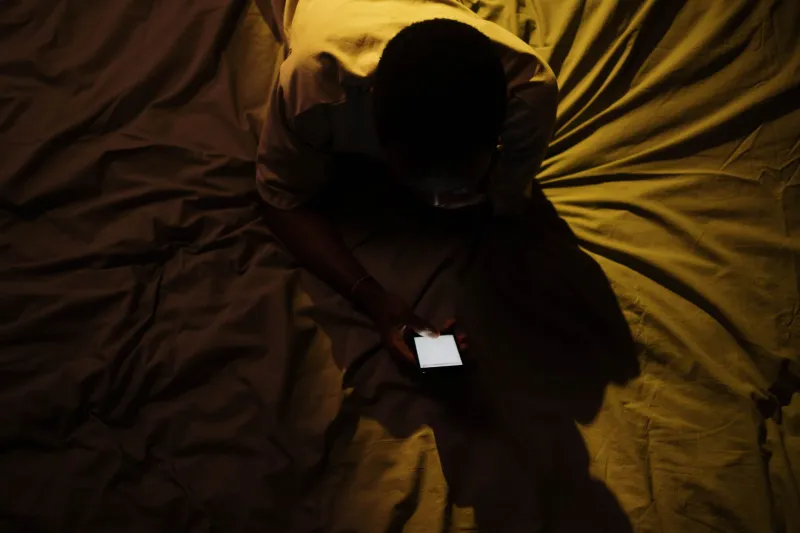
Somewhere between your last thought and this one, you probably checked your phone. Not because anything happened. Not because you heard a sound or felt a buzz. Just because the pause was there, and your thumb knew what to do with it.
Welcome to the infinite refresh — the compulsive gesture that keeps firing long after the reward stopped showing up.
The Gesture That Got Ahead of You
Here's something worth sitting with: the pull-to-refresh motion — that little downward drag you do on basically every feed app — was designed to feel like something. Not just functionally, but physically. Loren Brichter, the developer who invented the gesture for an early Twitter client back in 2009, has since said he regrets it. He compared it to a slot machine lever. You pull, you wait, you see what comes up.
The slot machine comparison isn't metaphorical. It's neurological. Variable reward schedules — where the payoff is unpredictable — are among the most powerful conditioning mechanisms humans have ever encountered. Your brain doesn't know if the next refresh will bring something interesting, something dumb, or nothing at all. That uncertainty is the whole engine. It keeps the behavior running even when the tank is empty.
And unlike a slot machine, the app is always in your pocket. The lever is always right there.
Phantom Signals from Nowhere
Ever felt your phone vibrate when it didn't? You're not alone, and you're not losing it. The phenomenon is called phantom vibration syndrome, and studies suggest somewhere between 68 and 89 percent of smartphone users experience it regularly. Your nervous system gets so primed for incoming notifications that it starts generating false positives — basically hallucinating alerts.
That's not a glitch. That's your brain trying to be efficient by anticipating a stimulus it's been conditioned to expect. The apps didn't create this from scratch. They exploited a real feature of human attention — our deep sensitivity to social signals — and then cranked the dial until the system started misfiring.
The result is a body that checks for messages before the mind even forms the intention to check. The muscle memory is running the show.
Designed for the Pause
UI designers have a term for the small dead moments in your day — standing in line, waiting for a page to load, sitting in the first ten seconds of a commercial. They're called micro-moments, and they're not wasted. They're targeted.
Apps are specifically architected to colonize those pauses. Infinite scroll removes the natural stopping point that a paginated feed would provide. Notification timing is calibrated — not to tell you something important, but to re-engage you at the exact moment your session might have ended. The red badge icon on your app drawer isn't just informational. Red is an alert color. It triggers a low-grade stress response that doesn't fully resolve until you tap it.
Even the loading animation — that little spinner or skeleton screen — is doing something. Research on what's called "ludic loops" suggests that brief anticipatory states can be pleasurable in themselves. The wait before the content loads is part of the experience. The refresh gesture followed by a half-second delay is its own tiny ritual, and rituals are sticky.
When the Dopamine Stopped Delivering
Here's where it gets genuinely strange. Most compulsive app-checkers will tell you, if you ask them directly, that they don't even enjoy it anymore. The check isn't satisfying. The scroll feels hollow. They put the phone down and pick it up thirty seconds later not because they expect something new but because — they're not entirely sure why.
This is what behavioral scientists call habit dissociation — when the cue-routine-reward loop continues even after the reward component has degraded. The behavior has been reinforced so many times that it no longer needs the reward to keep running. It's just running. On its own. In the background of your life.
Some researchers describe it as a form of behavioral tolerance, similar to what happens with substances. The initial dopamine hit from a new like or a funny video gets smaller over time. You need more stimulation to get the same response. And when the stimulation stops working, the behavior doesn't stop — it just becomes anxious and purposeless. You're checking without expecting anything. You're refreshing the static.
The Attention Economy's Dirty Secret
Platforms have a complicated relationship with this dynamic. On one hand, compulsive checking inflates engagement metrics — session counts, daily active users, time-in-app. On the other hand, users who feel bad about their usage are more likely to delete the app entirely, which is the one outcome the platform truly can't afford.
So there's been a strange, half-hearted push toward what the industry calls "digital wellbeing" features — screen time dashboards, usage reminders, app limits. Apple and Google both built these into their operating systems. Instagram and YouTube added them too. And almost universally, the research shows people ignore them, disable them, or feel vaguely worse after being confronted with the numbers.
The tools are real. The incentive to make them effective isn't. A feature that successfully reduces your usage is a feature that works against the platform's core business model. It's the cage selling you the key to a slightly smaller cage.
What the Static Is Actually Saying
There's a version of this behavior that isn't pathological — or at least, wasn't always. Humans are social animals with a deep evolutionary need to monitor our environments for signals. Checking for news, for messages, for changes in the social landscape — that's ancient behavior. The apps didn't invent the need. They just built an interface perfectly shaped to exploit it.
The refresh gesture is, in some weird way, a technological echo of something much older: the scan of the horizon, the check of the perimeter, the glance toward the sound in the trees. Your nervous system is doing something it evolved to do. It just got pointed at a feed instead of a forest.
The difference is that the forest occasionally had something in it. The feed has been tuned to simulate that possibility indefinitely, without ever quite delivering on it.
You keep pulling down. The signal keeps not arriving. And somehow, the gesture itself has become the thing.
Put the phone down. Pick it up again in thirty seconds. See what happens.
You already know what happens.