Still Transmitting: The Undead Web Infrastructure Nobody Turned Off
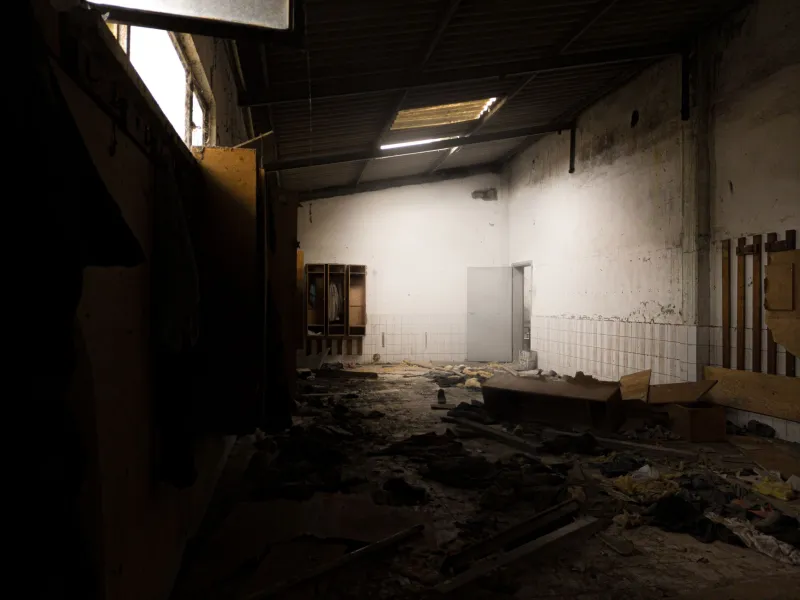
Picture a radio tower in the middle of a field. No town nearby, no listeners, no staff. Just a signal cutting through static on a loop, broadcasting weather reports for a city that flooded decades ago. Nobody built it to last forever. It just never got around to dying.
That's basically what's happening right now, across thousands of forgotten corners of the internet.
Orphaned servers. Zombie RSS feeds. Legacy CMS installations still auto-publishing to sites where the last human visitor was probably using Internet Explorer. The web has a graveyard problem, and the weird part isn't that these things exist — it's that they're active. Still transmitting. Still reaching out. Still waiting for someone on the other end to answer.
The Server That Outlived Its Purpose
When a startup dies, the press release gets written, the LinkedIn posts go up, the domain renewal lapses — and then, usually, nothing. Except sometimes the infrastructure doesn't get the memo.
Hosting contracts, especially older ones, were often prepaid in multi-year blocks. Some were attached to corporate accounts that auto-renewed without anyone noticing for years after the original team dissolved. The result is a surprisingly large population of web servers that are technically alive — accepting requests, serving cached pages, occasionally logging traffic from bots — with zero human involvement.
Researchers who map these orphaned systems describe them as some of the strangest artifacts in digital archaeology. One common find: old social platforms whose APIs are still technically open, still responding to queries, still returning user data from accounts that haven't been touched since the Obama administration. The data is just sitting there. The handshake still works. The lights are on.
Nobody's home, but the door's unlocked.
RSS: The Protocol That Refused to Die
If you want to find the internet's most committed ghosts, follow the RSS feeds.
RSS — Really Simple Syndication — was supposed to be the backbone of an open, decentralized web. For a while, it kind of was. Blogs, news sites, podcasts — everything had a feed. Then Google Reader shut down in 2013, the tech press declared RSS dead, and most of the internet moved on.
Except the feeds didn't stop.
Thousands of them are still active right now, pinging aggregators and feed readers with updates from sites that haven't published new content in years. Some of these feeds are pulling from auto-generated content systems that were set up once and never switched off — churning out templated articles about mortgage rates or local weather or movie showtimes, syndicated to exactly zero human subscribers, indexed by exactly zero search engines that still care.
It's content created for an audience that evaporated. A broadcast without a receiver. And there's something almost poetic about it — this stubborn little XML protocol still doing its job long after everyone agreed the job didn't matter anymore.
Legacy Systems and the Cost of Turning Things Off
Here's something the tech industry doesn't love to talk about: shutting things down is hard. Like, genuinely, technically hard.
Large organizations — banks, hospitals, universities, government agencies — are running infrastructure that's decades old. Some of it is connected to newer systems in ways that aren't fully documented. Turning off the old stuff risks breaking something nobody realized was still dependent on it. So the old stuff stays on. And stays on. And stays on.
This is how you end up with federal government servers still running software from the early 2000s. It's how hospital networks end up with forgotten subdomains serving outdated patient portal interfaces. It's how a mid-sized Midwestern university's web server ends up broadcasting a faculty directory last updated in 2007 to anyone who knows the URL.
None of this is malicious. It's not even really negligence, exactly. It's just the natural entropy of complex systems that were built incrementally, by people who've since moved on, without a clear decommissioning plan. The internet wasn't designed with a graceful exit strategy. Things were built to connect, not to disconnect.
What the Bots Find
The only consistent visitors to most of these dead zones are automated crawlers — search engine spiders, security scanners, academic web archivists, and the more ambiguous category of bots whose purpose is genuinely unclear.
Web archivists at institutions like the Internet Archive have documented the experience of crawling these ghost systems as unexpectedly eerie. You pull up a page and everything is technically functional — images load, links resolve, forms accept input — but the context is completely gone. A forum where people argued passionately about something nobody cares about anymore. A guestbook full of names attached to no living online presence. A countdown timer for an event that ended fifteen years ago, still ticking downward into negative numbers.
Some crawlers have flagged these sites as anomalies because their activity patterns don't match anything in the normal taxonomy of web behavior. They're not dead enough to ignore and not alive enough to categorize. They exist in a kind of digital limbo that our systems weren't built to account for.
The Permanence Paradox
There's a contradiction at the heart of how we built the internet. We were told, repeatedly, that the web was impermanent — that links rot, that platforms disappear, that nothing online lasts. And that's true. Plenty of things vanish without a trace.
But plenty of other things refuse to vanish at all. They just keep going, long past the point where anyone intended them to, accumulating digital sediment in server logs that nobody reads.
Maybe that's what makes these ghost systems so unsettling. They don't fit the story we tell ourselves about digital impermanence. They're not lost — they're stranded. There's a difference. Lost things are gone. Stranded things are still right there, still reaching out, still technically available to anyone who knows where to look.
And some of them have been reaching out for a very long time.
Signal Without Source
What does it mean for something to exist if nothing interacts with it? Philosophers have debated versions of this question for centuries. The internet just made it concrete.
Somewhere right now, a forgotten RSS feed is pinging a dead aggregator with an update nobody will read. A legacy server is accepting a request from a bot and returning a page nobody will see. A database is storing a timestamp for a login that will never happen.
The signal is still going. The static is still there.
Creabje exists somewhere in that frequency range — in the space between what's officially online and what's actually alive. And from here, the undead web looks less like a graveyard and more like a waiting room. All these systems, still running, still transmitting, still patient.
Waiting for someone to finally pick up.