Beautiful Breakdowns: When Corrupted Code Became the Canvas
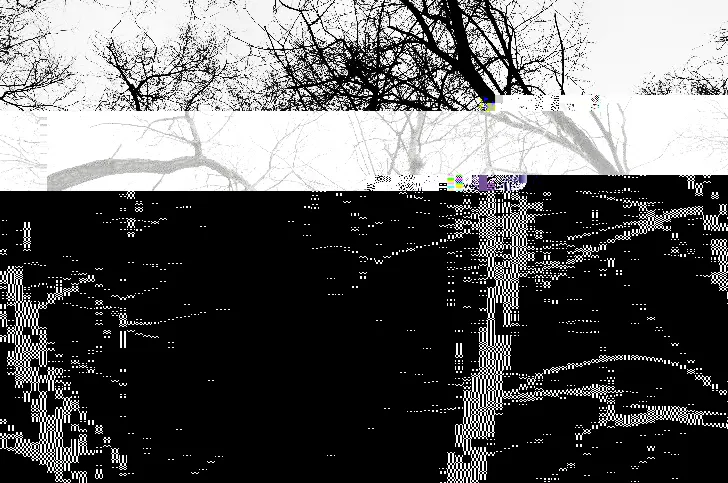
Photo: Lucas Rafael Tenllado Gil, CC BY-SA 4.0, via Wikimedia Commons
There's a specific feeling most of us recognize — the stomach-drop moment when a video file stutters into a mosaic of wrong colors, or when a photo opens as a cascade of corrupted blocks and alien geometry. Most people close the file and move on. A small, strange, deeply committed group of creators looked at that same disaster and thought: that's exactly what I want to make.
Welcome to glitch art, a movement that started in basements and Tumblr feeds and has quietly migrated into museum exhibitions, album covers, and the visual DNA of contemporary digital culture. It's messy by design. That's the whole point.
Static Was Always There — Someone Just Had to Listen
The roots of glitch aesthetics didn't start with the internet. Video artists in the 1960s and 70s were already poking at analog equipment, deliberately degrading tape signals to produce warped, dreamlike imagery. Nam June Paik — often called the grandfather of video art — was manipulating televisions with magnets and circuit modifications decades before anyone coined the term "glitch art." The impulse to find beauty in malfunction is older than the machines we use to create it.
But the digital era gave the movement a new vocabulary. When consumer technology became widespread in the 80s and 90s, so did the experience of things going wrong in spectacular, visually interesting ways. JPEG compression artifacts. Bit-crushing audio errors. The iconic blue screen of death. These weren't just inconveniences — they were windows into the raw, unpolished architecture of digital systems. For certain artists, they were invitations.
By the early 2000s, a loose global community had formed around deliberately inducing and capturing these errors. They called the process "databending" — opening image files in audio software, text editors, or hex editors and manually introducing corruption. The results were unpredictable, unrepeatable, and often genuinely stunning.
The Tools of Deliberate Destruction
So what does it actually look like to make glitch art? The methods are as varied as the artists who use them, but a few techniques have become foundational to the practice.
Databending remains one of the purest approaches. An artist might open a .jpg file in a program like Audacity — software meant for audio editing — and apply reverb or distortion to the raw data. The file gets saved back out as an image, and what emerges is something the original photograph never intended to be: streaks of color, geometric interference patterns, fragments of the original image swimming in digital noise.
Pixel sorting became a widely recognized glitch aesthetic after artists like Kim Asendorf popularized automated scripts that rearrange pixels according to brightness, hue, or other values. The results look like the image is melting sideways, or being pulled apart by invisible currents. You've seen this effect even if you didn't know what it was — it's been borrowed heavily by graphic designers, music video directors, and social media aesthetes.
Circuit bending takes the practice into physical hardware, modifying cheap electronics — children's toys, vintage game consoles, keyboards — to produce unintended sounds and visual outputs. It's part engineering, part performance art, and the results are genuinely unpredictable in ways that purely software-based glitch art can't replicate.
The Politics Inside the Pixels
Here's where things get interesting beyond just the visual appeal. Glitch art has always carried an ideological undercurrent that its most thoughtful practitioners are pretty open about.
We live in a culture that relentlessly optimizes. Every platform is being refined, every interface made smoother, every algorithm tuned to deliver a more seamless experience. The tech industry's entire pitch is predicated on the elimination of friction. Glitch artists are, in a very direct way, pushing back against that. They're insisting that the errors and failures of our systems are worth preserving — even worth celebrating — because they reveal something true about the technology we've built our lives around.
Rosa Menkman, a Dutch theorist and artist whose work has been exhibited internationally, has written extensively about what she calls "the glitch moment" — that instant of system failure that briefly exposes the hidden infrastructure beneath our polished digital surfaces. Her point isn't that broken things are better, but that our obsession with seamlessness actively obscures how these systems work and who they serve. The glitch, in her framework, is a kind of radical transparency.
For American artists working in this space, there's often an additional layer of cultural commentary. The United States has a particular relationship with technological optimism — Silicon Valley's mythology of frictionless progress, the startup world's perpetual promise of disruption and perfection. Glitch aesthetics sit in direct conversation with that mythology, suggesting that the cracks in the system are features, not bugs.
From Underground to Everywhere (And What Gets Lost)
The uncomfortable truth for longtime practitioners is that glitch aesthetics have been thoroughly absorbed by mainstream visual culture. Vaporwave borrowed its color palette and degraded textures. Countless album covers deploy pixel corruption as a signifier of edge and authenticity. Instagram filters simulate analog damage. Major brands have used glitch-inspired visuals in advertising campaigns.
This is the classic tension of any underground movement: the aesthetics get extracted and circulated while the ideas behind them get left behind. A fashion brand using databent imagery in a campaign isn't engaging with Menkman's critique of technological seamlessness — they're just using the visual shorthand because it reads as cool and slightly transgressive.
The artists who've been in this space for years tend to have complicated feelings about it. On one hand, broader recognition means the work reaches more people. On the other, when the visual language of system failure becomes a stylistic choice divorced from its critical content, something essential evaporates.
The Signal Underneath
What keeps glitch art vital, even as its surface aesthetics get endlessly recycled, is the fundamental weirdness of what it's doing. It's art made from failure. It's beauty extracted from the moments when our tools stop cooperating. In a media landscape increasingly dominated by AI-generated content optimized for maximum engagement, there's something genuinely countercultural about work that's messy, unrepeatable, and rooted in the honest imperfections of real systems.
The static was always there in the signal. These artists just figured out how to tune into it.