Your Bedtime Is a Feature, Not a Bug: How Streaming Platforms Engineered the End of Sleep

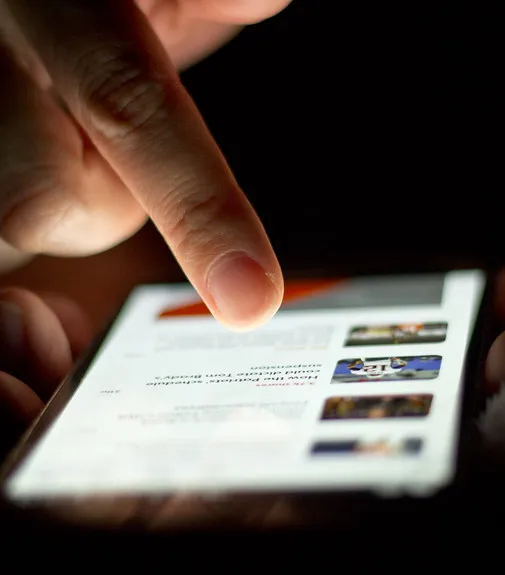
Photo by Photo by The Ridge Ohio on Unsplash on Unsplash
Somewhere around 1:47 a.m., you made a decision. Except you didn't, really. The next episode had already started. The ambient score was already doing something to your chest. The cliffhanger from fourteen minutes ago was still sitting unresolved in your prefrontal cortex like a splinter, and the only way to get it out was to keep watching. You told yourself just one more. That was three episodes ago.
This is not an accident. None of it is.
The Architecture of One More Episode
Streaming platforms don't just host content — they engineer states. The autoplay feature, which Netflix famously A/B tested for years before rolling out globally, operates on a principle borrowed from behavioral psychology: remove the moment of choice, and people default to inertia. That five-second countdown before the next episode begins isn't there to be helpful. It's there to make opting out feel like the active decision, the effortful one, the one your tired brain is least equipped to make at midnight.
Former UX designers who've worked inside the streaming ecosystem — several of whom have spoken publicly after leaving their roles — describe a culture where engagement metrics were treated with near-religious reverence. One designer, who left a major platform in 2021 and now consults for digital wellness nonprofits, described the internal framing this way: every minute a user spends not watching is a failure state. Sleep, specifically, was discussed in early product meetings as "the primary competitor."
Let that sit for a second. Sleep. The thing your body requires to not break down. Classified as competition.
What Cliffhangers Are Actually Doing to Your Brain
Neuroscientists who study sleep deprivation have started paying closer attention to streaming-adjacent behavior, and the findings are pretty grim. The Zeigarnik effect — a well-documented psychological phenomenon where incomplete tasks occupy more cognitive bandwidth than completed ones — turns out to be extremely exploitable in a serialized narrative context. When a show cuts to credits mid-crisis, your brain doesn't file it away. It keeps the thread open. It loops.
This creates a feedback loop with your body's own chemistry. Dopamine, which gets a lot of credit (and blame) in these conversations, isn't just about pleasure — it's about anticipation. The moment before the reveal. The second before the kiss. The scene right before the credits roll. Platforms have gotten extraordinarily good at manufacturing that moment repeatedly, in sequence, across an entire season's worth of episodes. You're not watching TV. You're chasing a feeling that the show keeps almost delivering.
Meanwhile, cortisol — your stress hormone — spikes during tense narrative sequences. Blue light from screens suppresses melatonin production. Your body thinks it's daytime. Your brain thinks the story isn't over. You're physiologically primed to stay awake and cognitively primed to stay engaged. The platform didn't make you watch until 3 a.m. It just built a very specific room and left the door open.
Algorithmic Timing and the Late-Night Slot
Here's where it gets stranger. Some researchers and former platform employees have pointed to evidence that recommendation algorithms don't just track what you watch — they track when. Your late-night viewing profile looks different from your Saturday afternoon one, and the algorithm knows this. Shows with higher emotional intensity, faster pacing, and unresolved narrative arcs get surfaced more frequently during evening hours, when your decision-making faculties are already depleted and your resistance to "just one more" is at its lowest.
This is sometimes called temporal targeting in UX circles, though you won't find it in any press release. The idea is simple: serve the most compelling content at the moment when the user is most vulnerable to it. It's not sinister in isolation — it's just optimization. But when the thing being optimized is your sleep schedule, and the optimization is happening without your knowledge or consent, the ethics get murky fast.
The Friction Activists Fighting Back
Not everyone is going quietly into that dark algorithm. A loose coalition of people — they don't have a unified name, but "friction activists" has started circulating in digital wellness spaces — have begun deliberately sabotaging their own viewing experiences as a form of resistance. Some disable autoplay entirely and set physical phone timers before each episode starts. Others use browser extensions that strip out recommendation carousels and hide episode counts, removing the visual cue of "only four more left in the season" that functions as its own kind of lure.
Some go further. There are Reddit communities dedicated to watching shows out of order, or skipping to the middle of episodes, specifically to break the narrative tension that keeps people locked in. It sounds absurd — and it kind of is — but the underlying logic is coherent. If the platform's power comes from manufacturing compulsion through story mechanics, disrupting the story mechanics disrupts the compulsion.
A handful of therapists working in digital addiction spaces have started recommending friction tactics to clients who report losing sleep to streaming. The irony isn't lost on anyone: we're developing coping strategies for a product that was designed, at enormous expense, to need coping strategies.
Signal in the Static
What's genuinely strange about all of this is how normalized it's become. "I stayed up too late watching" is not a confession anymore — it's a personality trait, a badge, a thing you say at work on Monday to signal that you're culturally current. Netflix even leaned into it with the phrase "Netflix and chill," reframing what is essentially sleep deprivation as a lifestyle aesthetic.
The platforms didn't just rewire viewing habits. They rewired the social meaning of watching. Bingeing became aspirational. Exhaustion became relatable. And somewhere in there, the actual experience of sleep — restorative, necessary, irreplaceable — got quietly reclassified as something you do when there's nothing good on.
There is always something good on. That's the point. That was always the point.
The signal never stops transmitting. The question is whether you're the one choosing to receive it, or whether the receiver was installed without your permission and tuned to a frequency you can't quite turn off.