Broke on Purpose: How Glitch Art Sold Out and Found Something Weirder on the Other Side
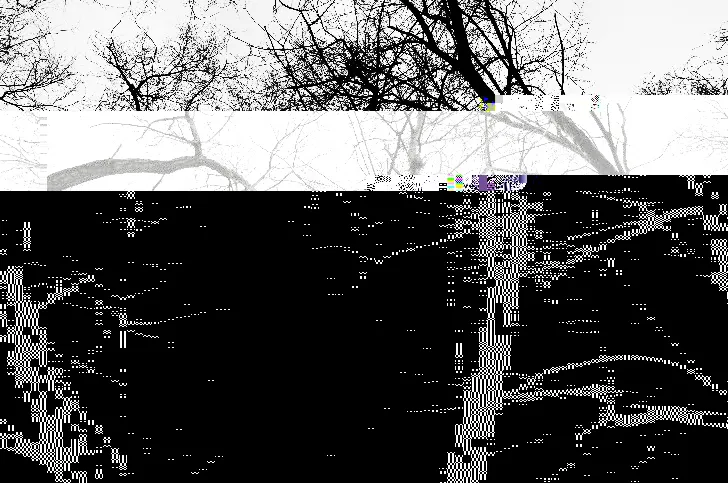
Photo: Lucas Rafael Tenllado Gil, CC BY-SA 4.0, via Wikimedia Commons
Let's start with the provocation, because glitch art has always been about provocation.
In 2011, a JPEG of a corrupted image sold for actual money at an actual gallery in New York. Artists who had spent years bending software to produce visual chaos — databending audio files into images, manipulating hex code to corrupt video, forcing compression algorithms to do things they absolutely were not designed to do — watched that transaction happen and had wildly different reactions. Some felt validated. Some felt something closer to grief. A few felt both at the same time, which is probably the most honest response.
That tension hasn't resolved. If anything, it's gotten louder.
Where It Came From (And Why It Mattered)
Glitch aesthetics didn't start with fine art galleries. They started with accidents — a VHS tape that got too close to a magnet, a video game cartridge that got blown into wrong, a corrupted download that opened into something unexpectedly beautiful. Artists noticed these accidents and started asking a question that sounds simple but isn't: what if you did that on purpose?
The movement that coalesced around that question in the early 2000s was genuinely anti-establishment in its bones. It rejected the clean, high-resolution, pixel-perfect aesthetic of commercial digital design. It embraced error as a form of honesty — the idea that the glitch reveals the underlying structure of a system, the seams that corporate production desperately tries to hide. When a compression algorithm breaks down, you see the math underneath. When a file gets corrupted, you see the arbitrary nature of the format.
For artists like Rosa Menkman, whose Glitch Studies Manifesto became something of a foundational text for the community, this wasn't just aesthetic preference. It was a philosophical position. The glitch was a form of resistance.
The Gallery Comes Knocking
Here's the thing about resistance: it photographs really well.
The visual language of glitch art — the chromatic aberration, the pixelated disintegration, the corrupted color fields — is genuinely striking. It's immediately recognizable and immediately arresting in a way that a lot of contemporary art isn't. When galleries started noticing this, the path from underground digital community to white-wall exhibition space turned out to be shorter than anyone expected.
The NFT boom of 2020-2021 accelerated everything. Suddenly, digital art that had always struggled with the basic problem of being infinitely reproducible had a (debatable, contested, deeply weird) mechanism for scarcity. Glitch artists who had been selling prints on Etsy for grocery money were moving work for figures that would have seemed like science fiction five years earlier.
The backlash from within the community was immediate and not entirely unfair. The argument went something like this: glitch art's entire point was to critique systems — digital, economic, corporate — and now it was being absorbed into those systems at a pace that would make any cultural critic's head spin. An art form built on breaking things was getting packaged, branded, and sold. The irony was almost too neat.
What the Purists Get Wrong
But here's where it gets interesting, and where I think the purist critique runs into a wall.
Cultural absorption isn't the same as cultural death. Punk got absorbed into mainstream music. Graffiti got absorbed into gallery culture. Hip-hop got absorbed into everything. In each case, the absorption changed the form — sometimes in ways that felt like betrayal, sometimes in ways that opened up new possibilities, usually both simultaneously.
Glitch art in the gallery doesn't automatically mean glitch art is dead. It might mean that the conversation about error, systems, and digital infrastructure is now happening in spaces with larger audiences. It might mean that a 22-year-old walking through a contemporary art museum in Chicago sees a databent image and starts thinking about what compression algorithms actually are and why we have them.
Some of the most interesting glitch work being made right now is explicitly engaging with its own commodification. Artists are glitching NFT contracts, corrupting their own auction listings, building work that breaks the very platforms meant to sell it. The subversive impulse didn't disappear — it just found a new target.
The Signal in the Noise
There's a version of this story where glitch art is a cautionary tale about how capitalism consumes everything. That version isn't wrong, exactly. But it's incomplete.
The more honest version acknowledges that glitch art was always about more than just being underground. It was about paying attention to the systems we live inside — the digital infrastructure that shapes how we communicate, consume, and understand reality. That project doesn't become less relevant because the work is now hanging in a gallery or minting on a blockchain. If anything, the stakes are higher.
We are more inside those systems now than we were in 2001. Our images are being processed by algorithms we don't understand. Our communications are being compressed, transmitted, and stored by infrastructure we can't see. The question the glitch artists were asking — what's actually underneath all this? — is more urgent now than it's ever been.
Maybe the movement didn't sell out. Maybe it just found a bigger room.
Or maybe it did sell out, and the interesting artists are already doing something else entirely, in some corner of the internet that hasn't been discovered yet. That feels pretty on-brand, honestly.