Haunted HTML: The Ghost Towns of the Early Internet That Refuse to Die
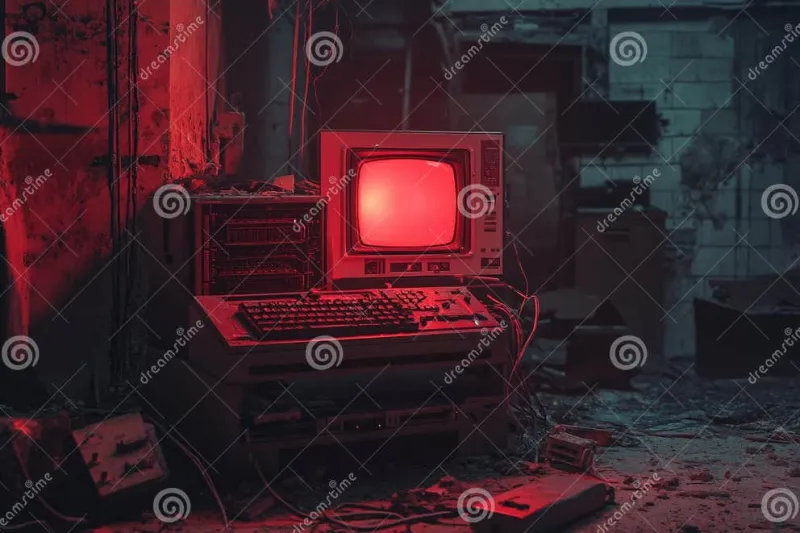
Photo: abandoned retro computer screen old website glowing dark room, via thumbs.dreamstime.com
Open a tab. Type in a URL you half-remember from 2003. Hit enter.
Maybe nothing loads. Maybe you get a domain-squatter page dressed up in ads. But sometimes — if you're lucky, or unlucky depending on your disposition — you land somewhere that shouldn't still exist. A tiled background of cartoon flames. A MIDI file that starts playing without warning. A guestbook with its last entry dated sometime during the Bush administration. You've found one. A ghost.
The early internet didn't just die. It haunted.
What Digital Archaeology Actually Looks Like
The Wayback Machine at the Internet Archive holds over 860 billion web pages. That number is almost meaningless until you start clicking around in it. Researchers, hobbyists, and a specific breed of deeply online nostalgists have been doing exactly that for years — a practice some are now calling digital archaeology, though the people doing it tend to be less Indiana Jones and more someone who never quite got over the closure of their favorite Neopets guild.
Jason Scott, a digital historian who's spent decades archiving software, websites, and online culture for the Archive, has described the work as trying to catch water in a net. "Every day, things disappear," he's said in various talks. "And every day, people realize they needed those things."
What makes these abandoned spaces so compelling isn't just their age. It's the specific texture of the early web — the handmade quality of pages built by people who were genuinely figuring it out in real time. Comic Sans wasn't ironic. Animated GIFs weren't retro. The aesthetic was the artifact of a specific cultural moment when the internet felt like a frontier, and everyone was staking their claim with whatever HTML they could scrape together from a library book.
The Eerie Beauty of Frozen Time
There's a particular kind of uncanny feeling you get scrolling through a website that stopped updating in, say, 2007. The "Under Construction" banner is still up. The counter in the corner stopped at some number in the thousands. The links in the sidebar lead to pages that 404'd a decade ago.
It's not quite sadness. It's more like walking through a room where someone clearly intended to come back and just... didn't.
Fan communities are especially haunting in this regard. Forums dedicated to TV shows that got canceled, bands that broke up, games that got delisted — these spaces were built on collective enthusiasm, and when that enthusiasm moved on (usually to newer platforms, usually to Twitter or Reddit or Discord), the architecture of the community just stayed behind. Thousands of posts. Years of in-jokes and arguments and genuine friendship. Still technically there. Still technically accessible. Just empty.
One preservation-focused Tumblr account, which has spent years cataloging defunct web communities, described it this way in a post that circulated pretty widely a while back: "These aren't just old websites. They're the only evidence that certain communities ever existed at all."
Planned Obsolescence and the Platforms That Ate Everything
Here's the uncomfortable part of the conversation: a lot of what's been lost wasn't lost to entropy. It was deleted on purpose.
MySpace famously wiped years of music uploads in 2019, claiming a server migration error but doing very little to recover the files. Vine shut down and took an entire comedic format with it. Google+ quietly vanished. Tumblr's 2018 content purge took out enormous swaths of creative communities. Yahoo Groups, which hosted everything from quilting circles to alternative literature collectives, was shut down with minimal warning in 2020, taking decades of posts with it.
The pattern is consistent: a platform acquires users, those users build culture on top of the platform's infrastructure, and then the platform decides that infrastructure isn't profitable enough to maintain. The culture, having no independent home, disappears.
This is what makes the preservationist impulse so interesting and so urgent. It's not just about nostalgia. It's about the fact that we've built enormous amounts of cultural production on top of corporate infrastructure that has no obligation to keep it alive.
What the Ghosts Are Saying
If you spend enough time in the Wayback Machine, you start to notice something. The early web, for all its visual chaos, had a kind of democratic energy that's genuinely hard to find now. Personal pages. Weird little projects. Sites that existed for no reason except that someone wanted to make them.
The ghost towns of the early internet aren't just sad. They're also, in a way, aspirational. They're evidence of a version of the web where individual people could build something, plant a flag, and say this is mine, this is what I think, this is what I made.
The signal from those old pages is faint. The static is heavy. But if you listen carefully, there's something there — a reminder that the internet was, at some point, genuinely weird and genuinely personal in a way that the algorithmic, engagement-optimized web of 2024 mostly isn't.
Maybe that's why people keep going back to look. Not just to feel nostalgic, but to remember that another version of this thing was possible.
And maybe, if we're paying attention, still is.